Will Maidstone's clay soil affect my patio or garden project?
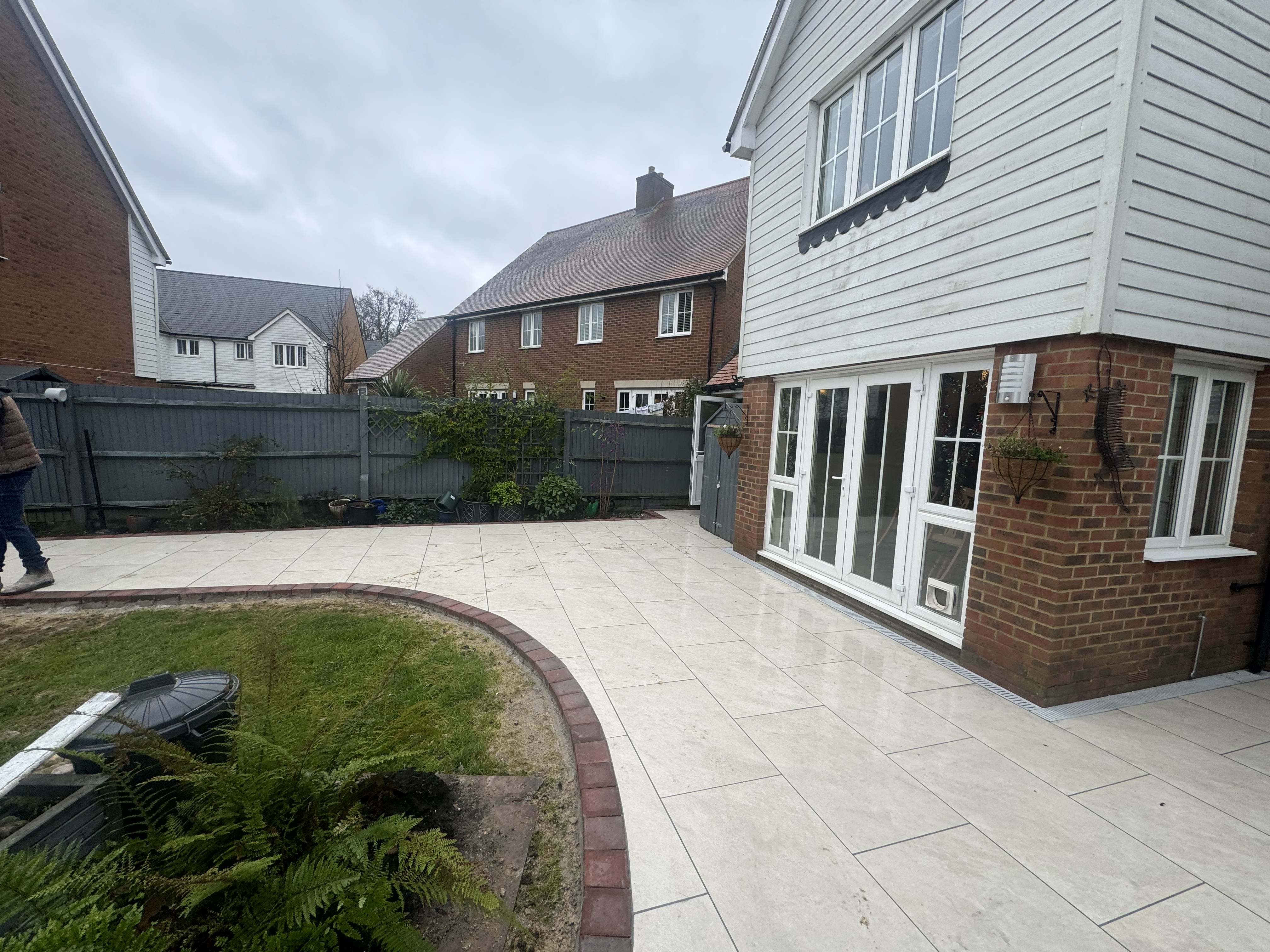
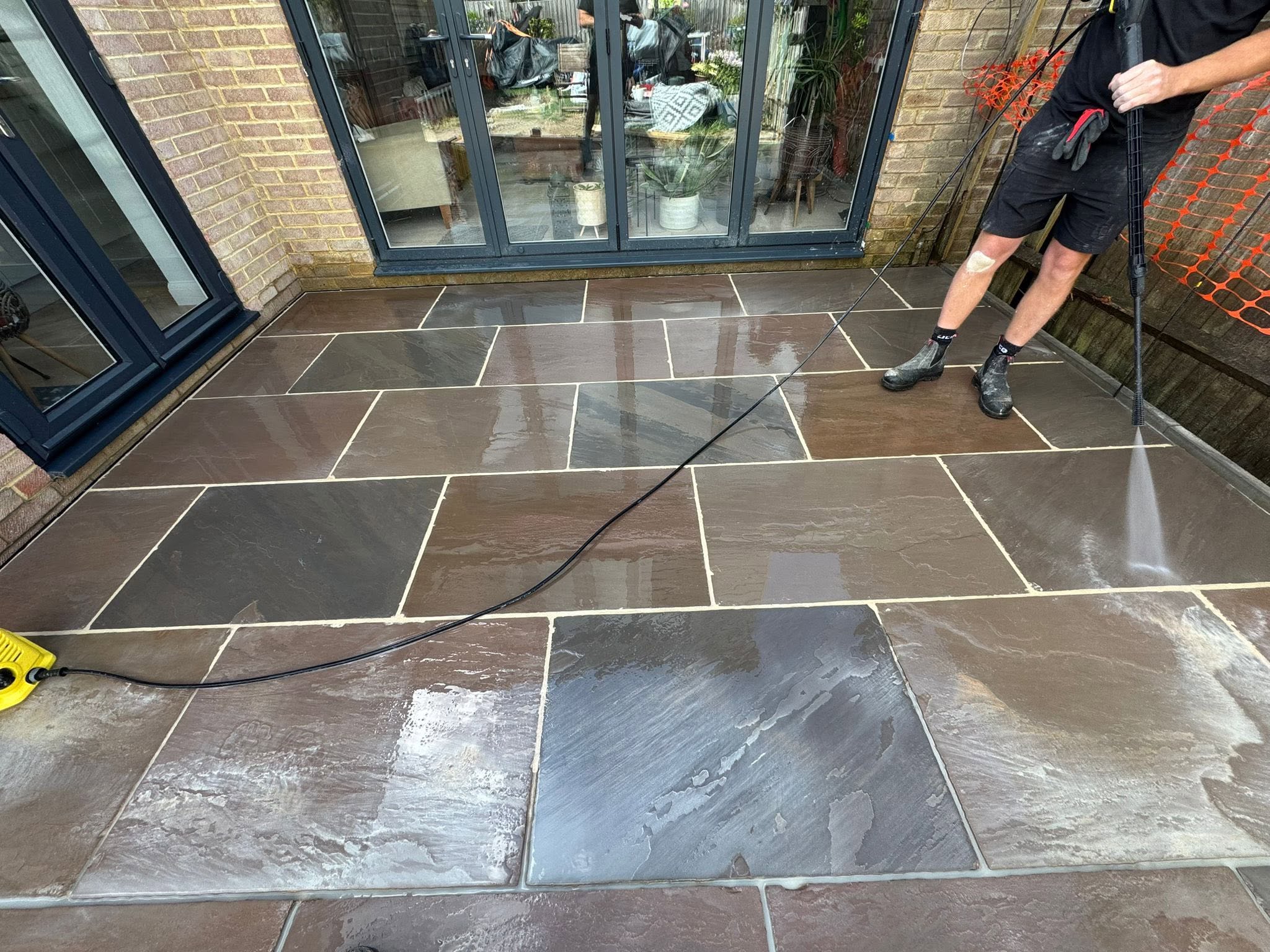
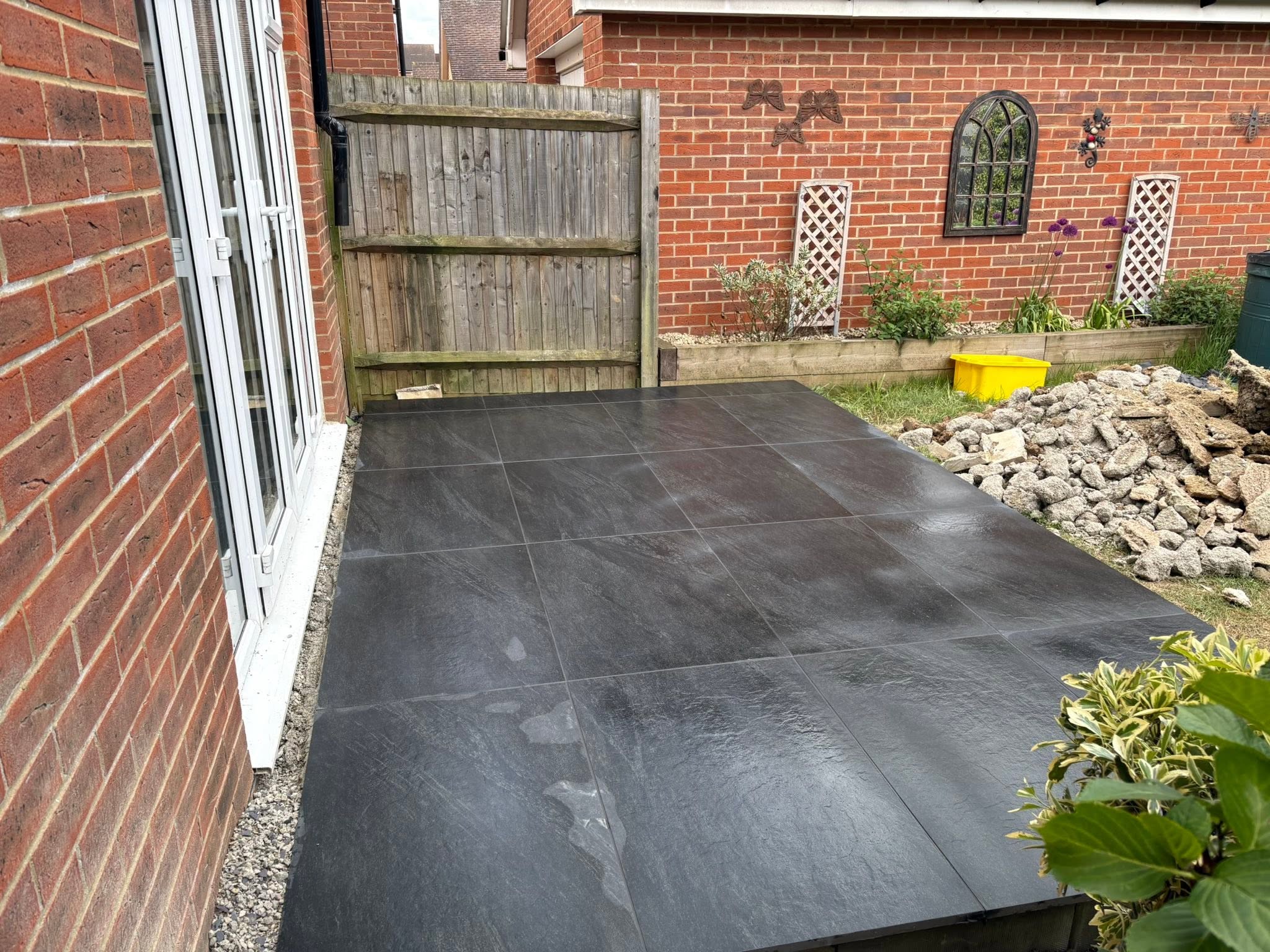
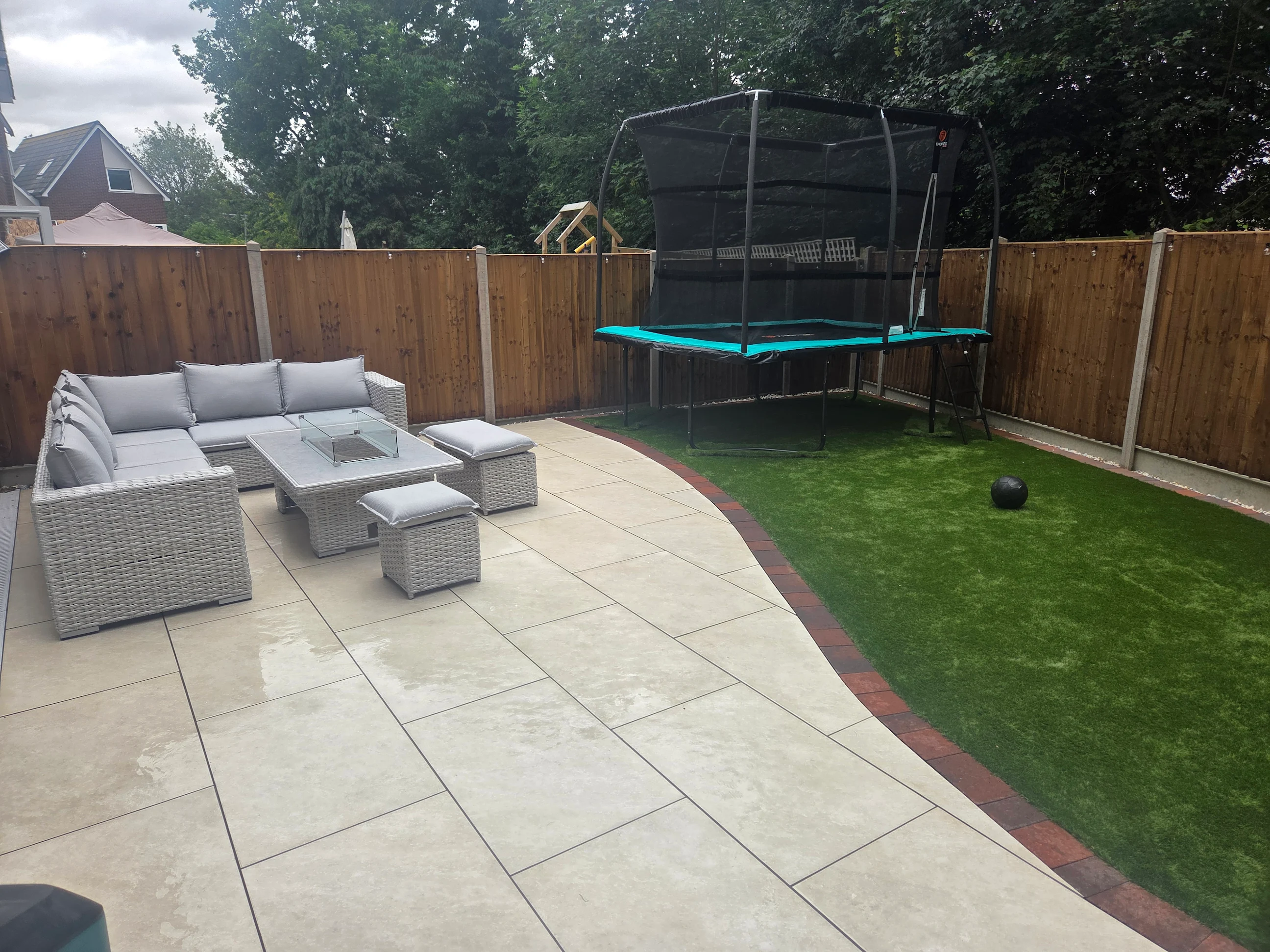
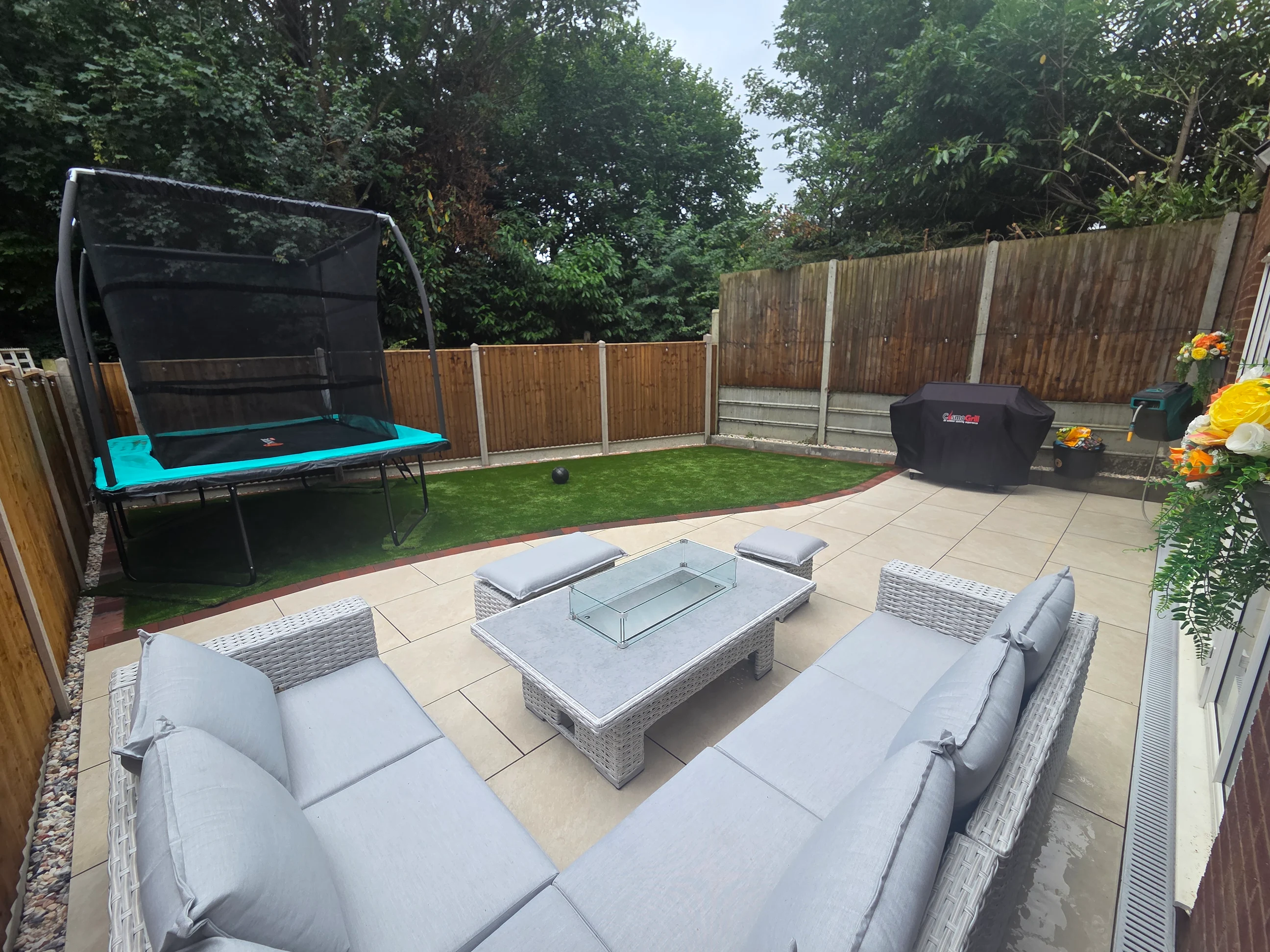
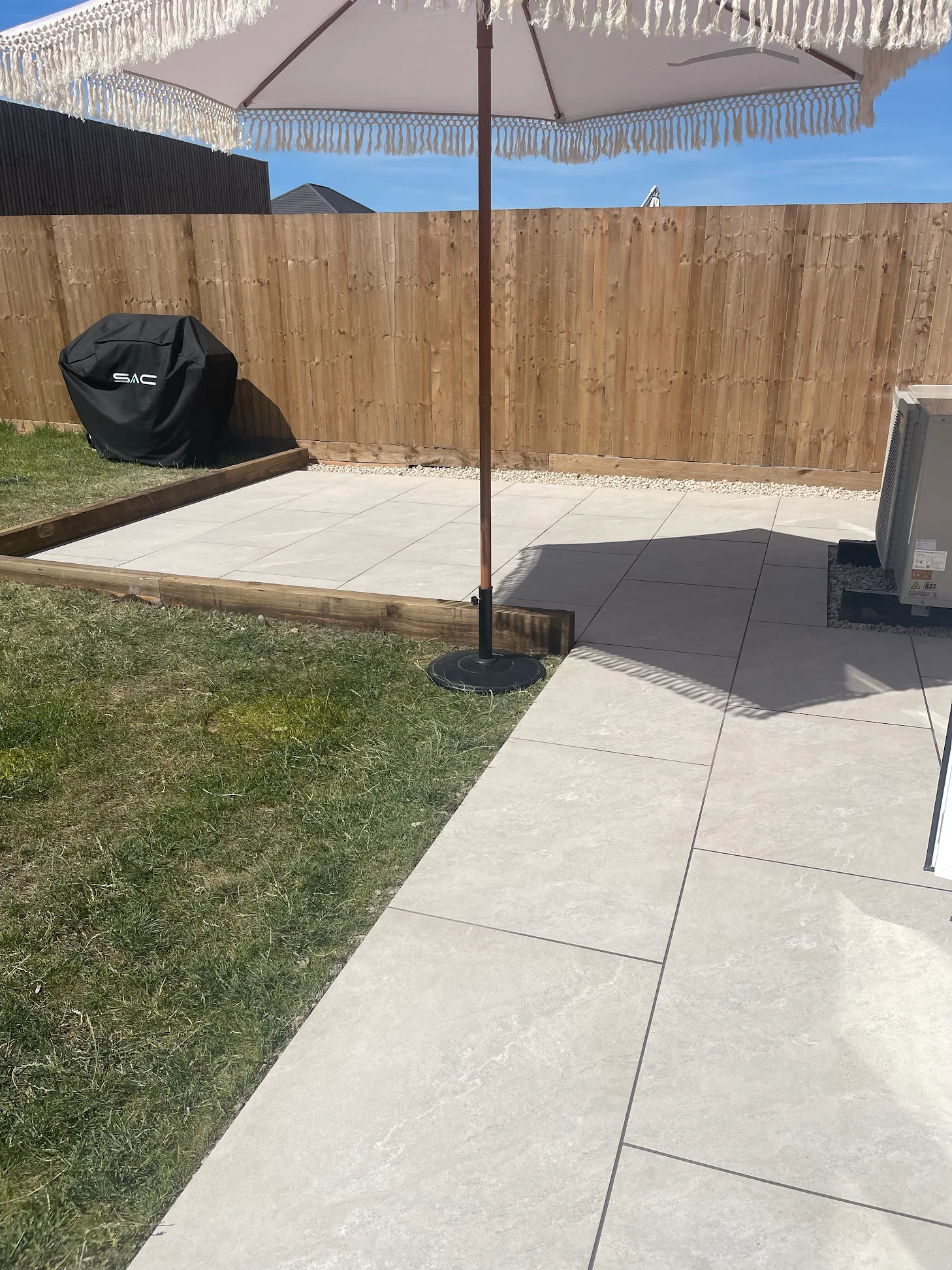
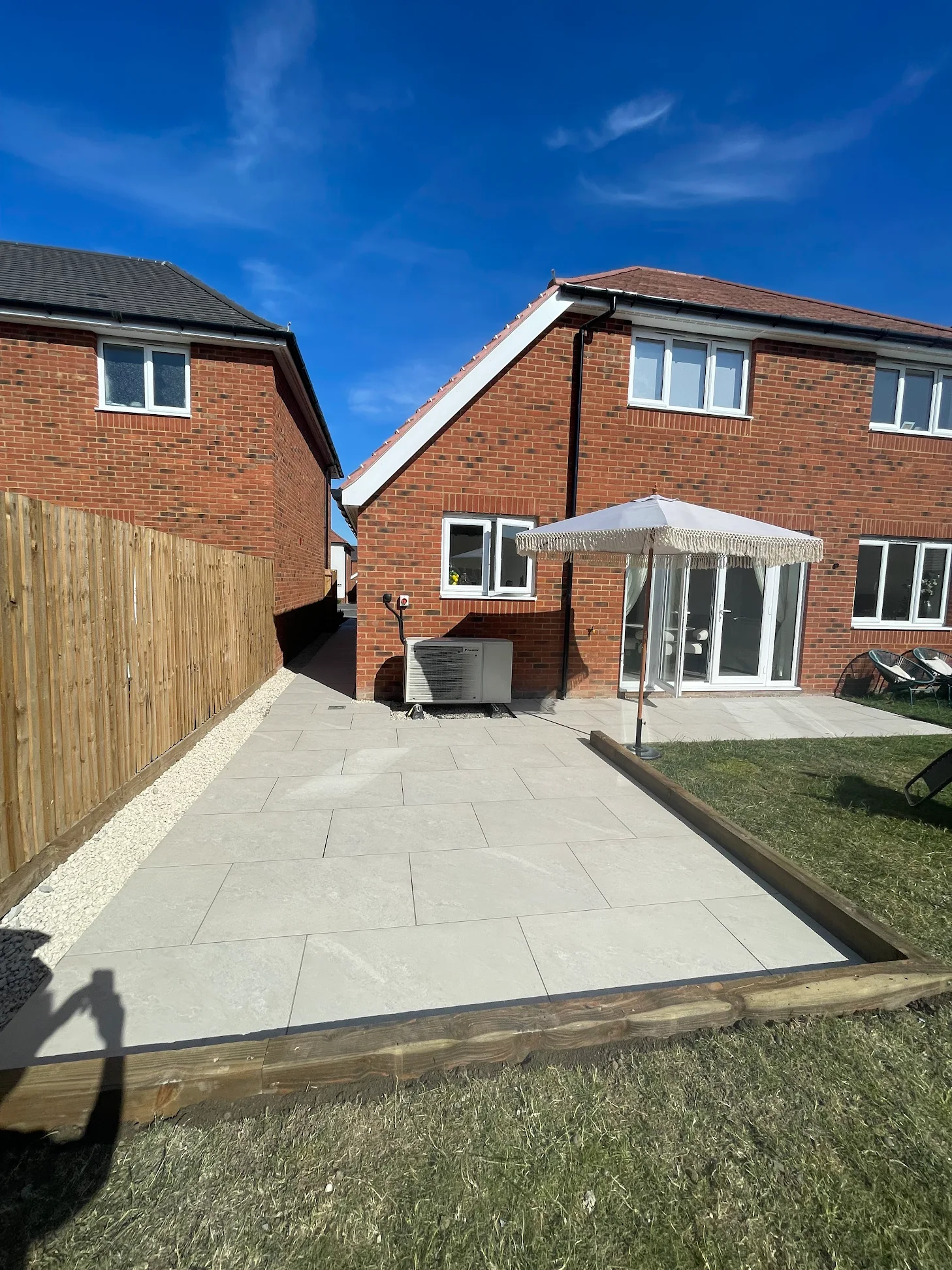
Gault and Wealden clay across most of ME14–ME16 shrinks and swells with seasonal moisture, which is the usual cause of lifted slabs, cracked pointing and settled paths on Maidstone patios. We counter it with a deeper MOT Type 1 sub-base, a geotextile membrane across the subgrade, and flexible jointing on slab-laid patios rather than rigid mortar. For planted areas we set levels so surface water drains away from the house into a border soakaway cut into the clay — never towards the property.
Does a raised patio or garden room in Maidstone need planning permission?
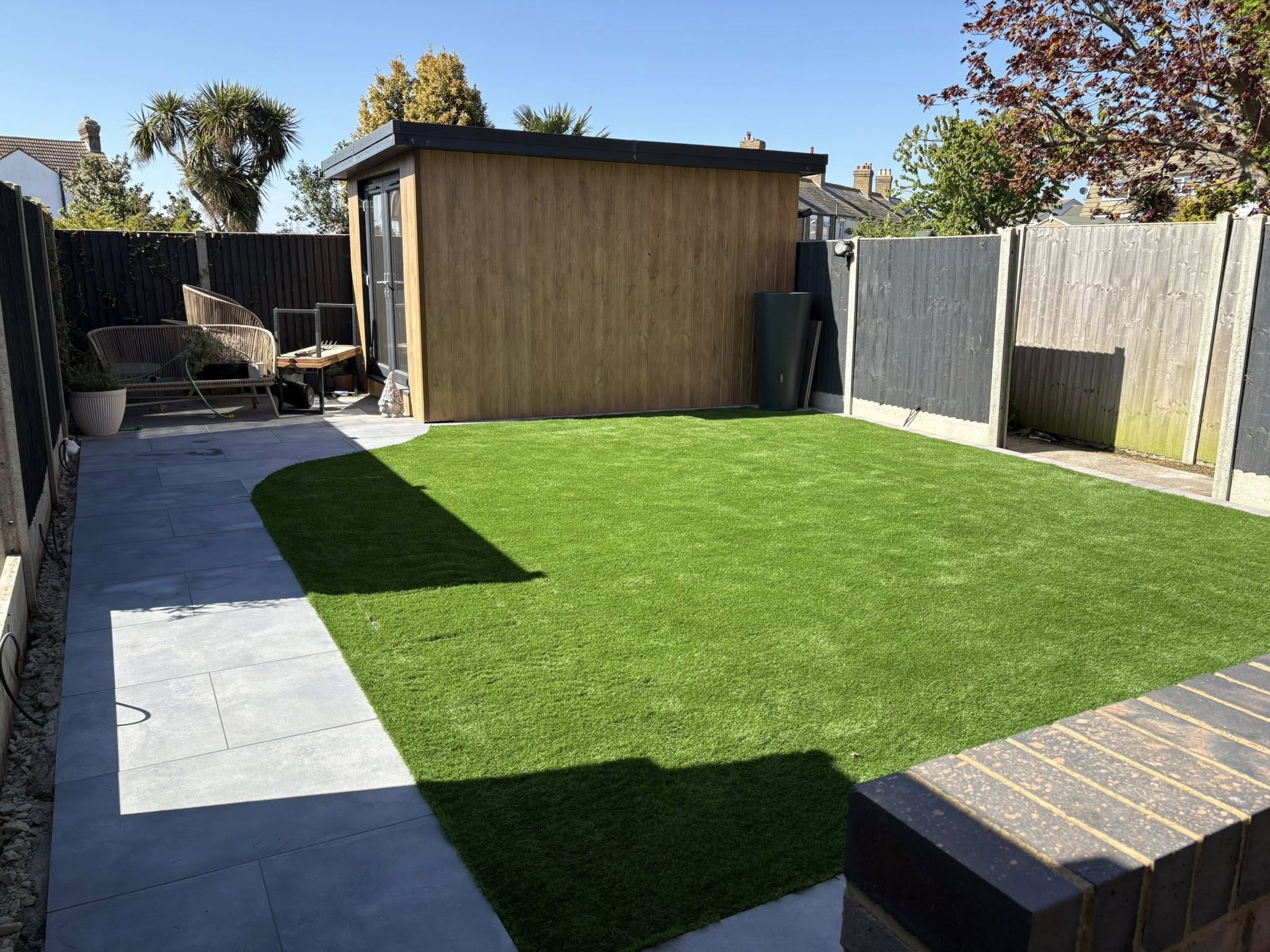
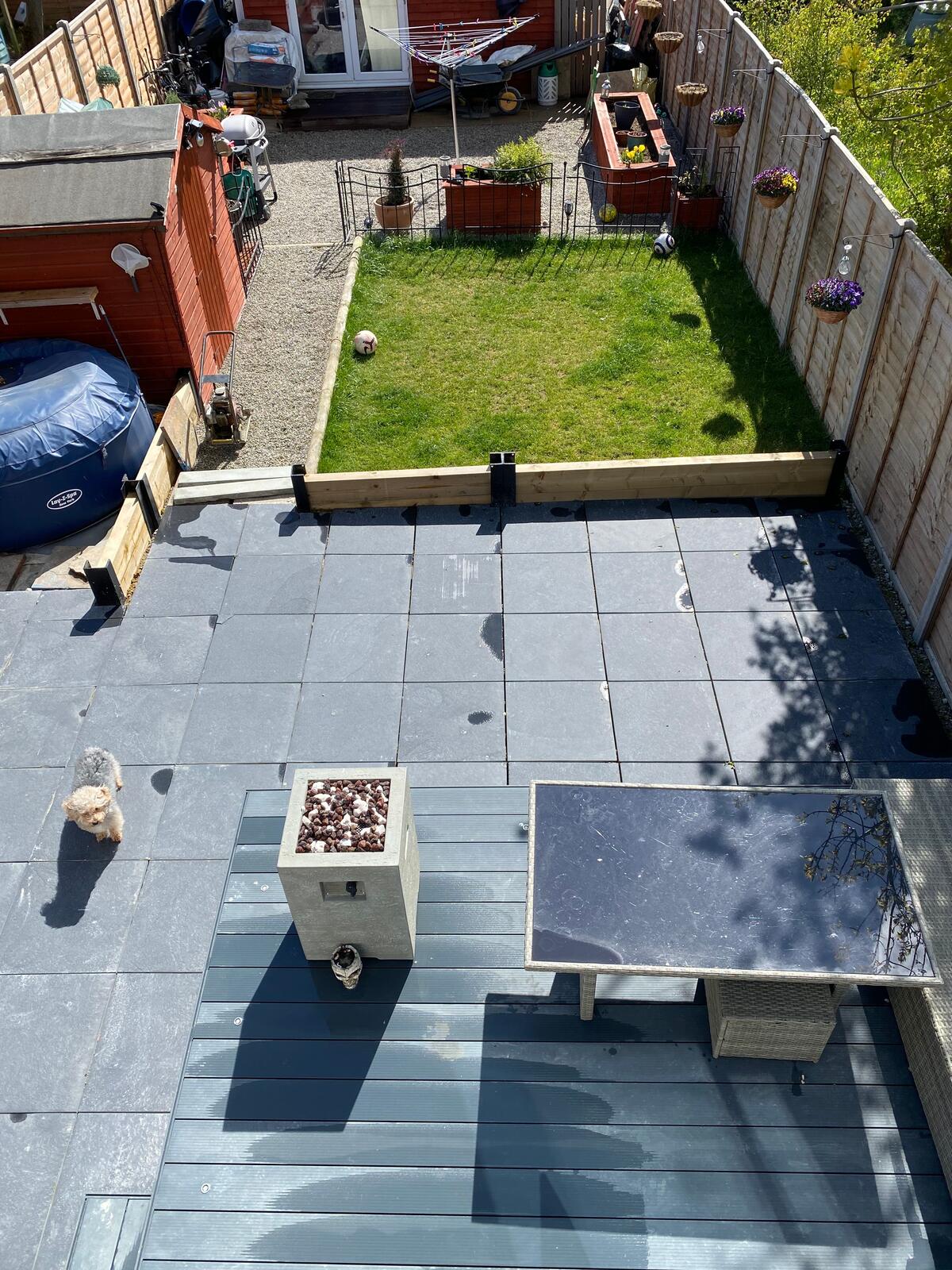
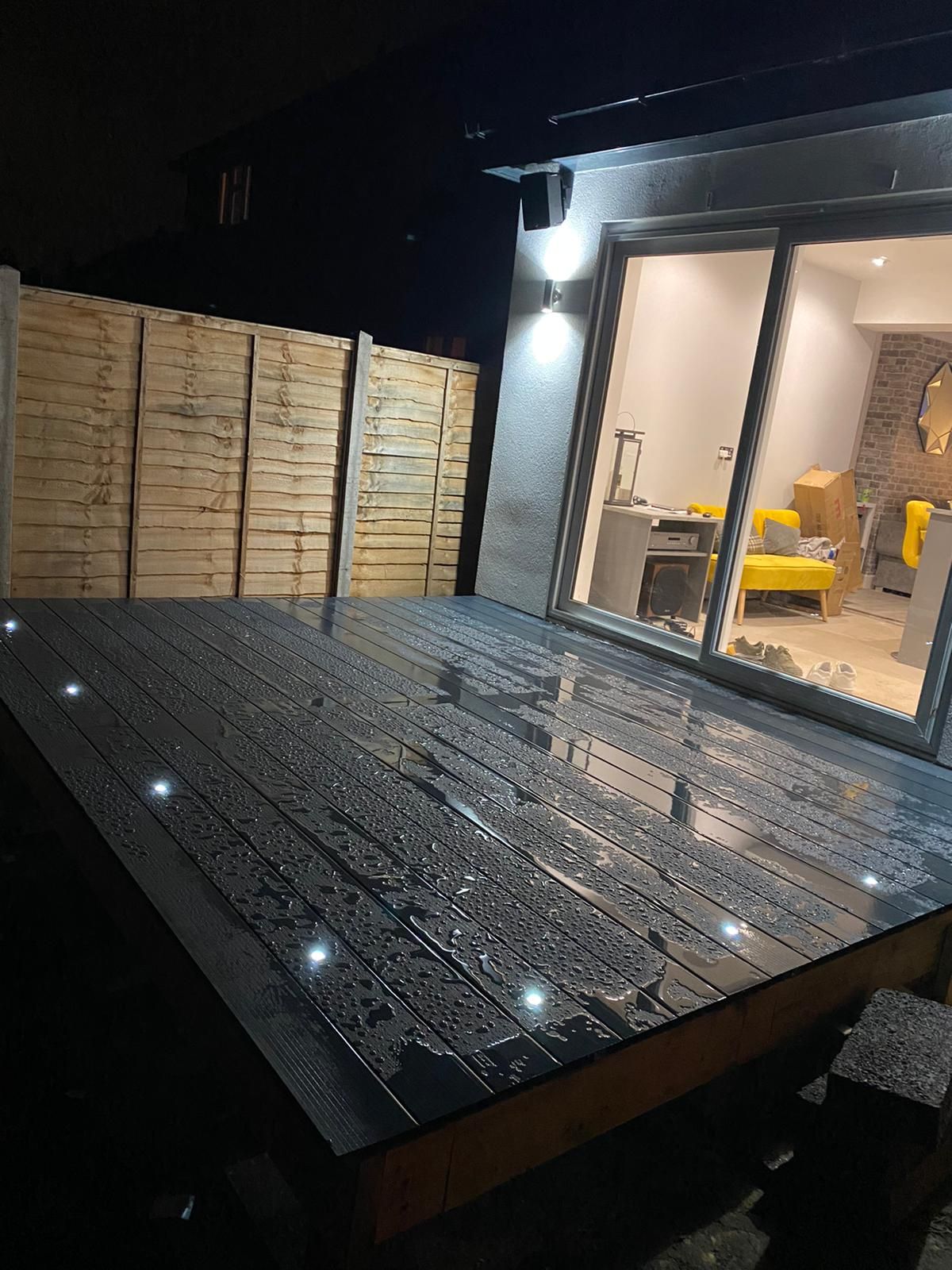
A standard ground-level patio is Permitted Development in most Maidstone properties. Raised decking or a paved platform more than 300mm above natural ground level requires a planning application to Maidstone Borough Council. Garden rooms and outbuildings are permitted under Class E if they are single-storey, under 2.5m eaves height within 2m of a boundary, covering less than 50% of the garden and behind the principal elevation — but Maidstone's town-centre conservation area and conservation villages in the borough (Bearsted, Loose, East Farleigh) remove those rights via Article 4 directions. We run the planning check as part of our survey so you have a definitive answer before any materials are ordered.
Are there conservation area restrictions for patios and garden projects in Maidstone?
Maidstone town centre has a designated conservation area running from the High Street down to the riverside, and several rural parishes — Bearsted, Loose, East Farleigh — have their own conservation-area designations. Within those areas, Maidstone Borough Council can require planning applications for raised patios, boundary walls over 1m on a highway or 2m elsewhere, and outbuilding works that would otherwise be Permitted Development. We check MBC's conservation-area map at survey stage and advise on whether a Certificate of Lawful Development or a full application is needed before works start.