Do I need planning permission for a driveway, patio or extension in Tonbridge?
It depends on the project — rules differ between driveways, patios and extensions, and vary by area within Tonbridge. For full details including conservation area restrictions and local rules specific to your street, see our guides:
Do you cover both Tonbridge and Tunbridge Wells?
We're based in Tonbridge and cover the TN9 postcode and surrounding villages extensively. We also work across the Tunbridge Wells area (TN1–TN4) — but it's worth knowing that Tunbridge Wells Borough Council is a separate planning authority from Tonbridge & Malling Borough Council. We confirm which authority applies to your property at survey stage so the right process is followed from the start.
Do I need planning permission for a driveway in Tonbridge?
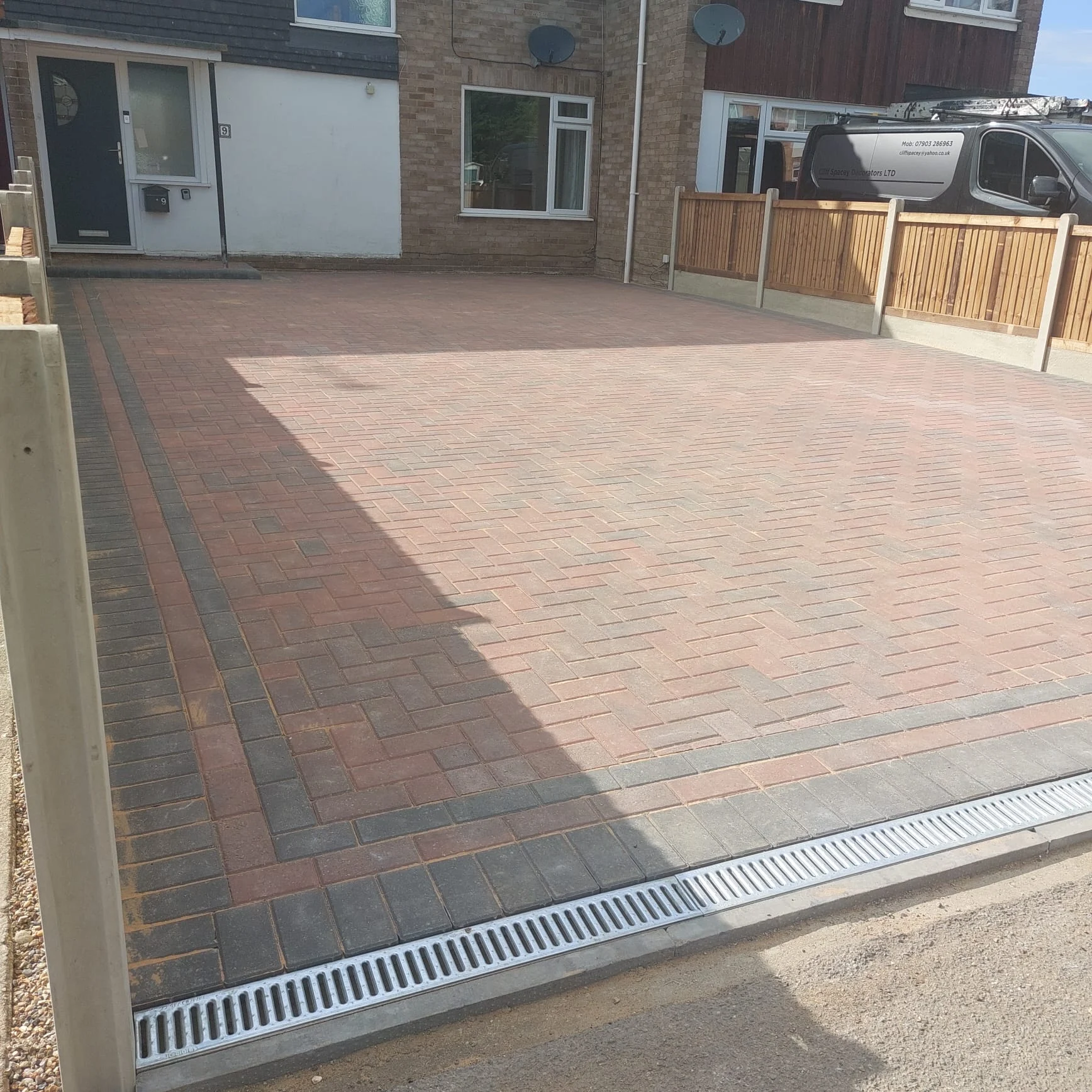
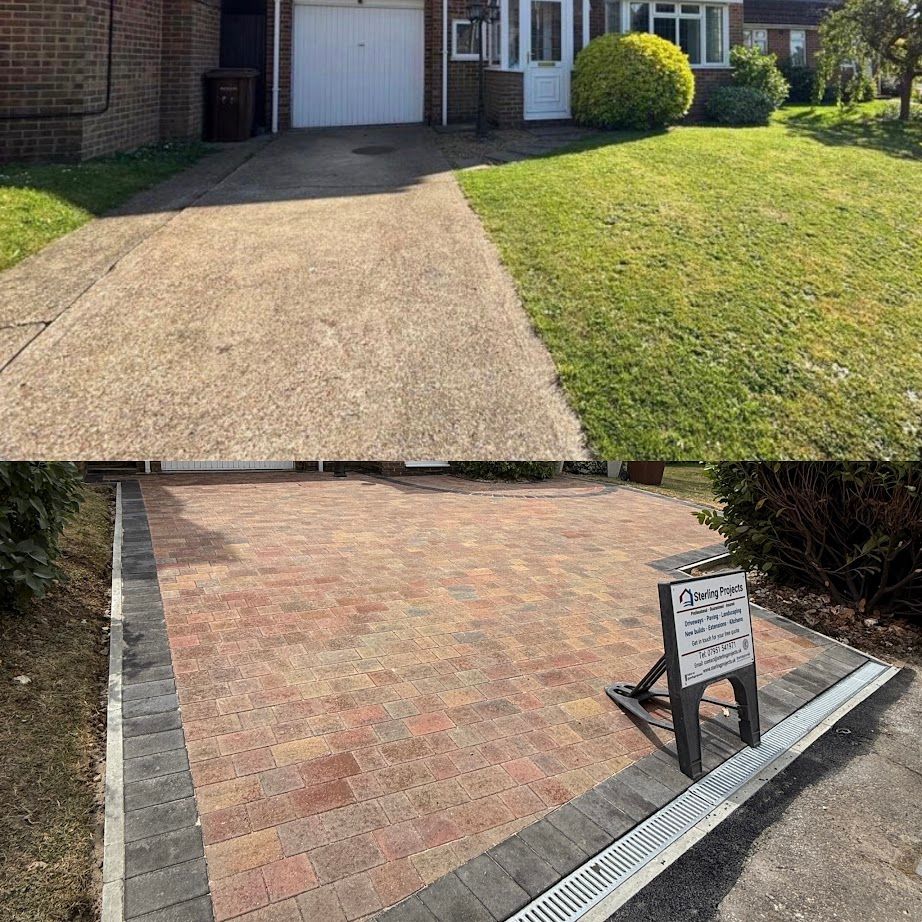
The national rule applies — permeable surfacing, or impermeable under 5m² draining to soft landscaping, needs no permission. Tonbridge & Malling BC recommends applying for a Lawful Development Certificate (LDC) first so you have written confirmation your scheme is permitted development, which is useful if your road is classified, you sit in a conservation area, or the property is near Environment Agency flood zones 2 or 3 along the Medway where drainage is scrutinised. Every driveway we install is designed to meet drainage requirements as standard — so in most cases there's nothing extra for you to worry about. If your property has any unusual circumstances, just ask and we'll advise.
How do I apply for a dropped kerb in Tonbridge?
Dropped-kerb applications in Tonbridge are handled by Kent County Council: £500 fee (£231 refunded if declined), 28-day target, two-year validity. Tonbridge & Malling BC's parking office (parking.office@tmbc.gov.uk) is the first contact for the planning / LDC strand, and they strongly recommend running that check before you pay the KCC fee — it avoids a refused application where a classified road or flood-zone frontage was the blocker.
What soil should I expect in Tonbridge?
Tonbridge sits on the Hastings Beds — Tunbridge Wells Sand, Wadhurst Clay and Ashdown sandstone on rising ground — with Weald Clay through the town-centre flats and Medway valley. Weald Clay plots in flood zones 2/3 need raised edging, a piped drain away from the property and a SuDS-compliant surface; sandstone plots on the rise drain far better and suit a standard permeable build-up. Flood-zone frontages often also need Environment Agency informal advice before a spec is finalised.
When does a Tonbridge extension need full planning permission?
Tonbridge & Malling Borough Council handles planning applications for most of the Tonbridge area. Standard PD rules apply — single-storey rear extension up to 4m (detached) or 3m (semi/terrace), within 4m height, is PD; Prior Approval covers up to 8m/6m. TMBC strongly recommends applying for a Lawful Development Certificate (LDC) on any project near the flood plain, a classified road or a conservation area, as it gives written confirmation of PD status. Two-storey extensions and side extensions need a full application. Note that Tunbridge Wells Borough Council handles the Tunbridge Wells side of the boundary — check which authority covers your property first.
Do I need a Party Wall Agreement for a Tonbridge extension?
The Party Wall etc. Act 1996 applies across Tonbridge. Notice is required when building on a shared wall, excavating within 3m of a neighbour's foundations to a depth beyond theirs, or excavating within 6m where a 45° line from the base of those foundations is undercut. Tonbridge's Weald Clay plots require deeper foundations than sandstone or chalk areas, meaning the 3m threshold is more commonly triggered even on modest rear extensions on town-centre terrace properties. On flood-zone frontages, piled foundation solutions further increase the likelihood of a notice being required. We assess party wall obligations at the site survey stage.
Do Tonbridge flood zones or conservation areas affect extension planning?
Tonbridge town centre and the Medway valley floor lie within Environment Agency flood zones 2 and 3, and extensions in those zones attract closer scrutiny from TMBC planners and the EA as a statutory consultee. Raising finished floor levels above the existing DPC — required by building regulations in flood zones — and specifying flood-resilient finishes are standard on valley-floor extensions. Conservation areas at the castle end of Tonbridge and in surrounding villages (Hadlow, Hildenborough, Yalding) carry Article 4 directions removing some PD rights. The Kent Downs National Landscape also clips the eastern edge of the borough near Ightham and Borough Green, where materials guidance is stricter. TMBC's LDC route gives written confirmation of the planning position and is worth obtaining before works start on any constrained plot.